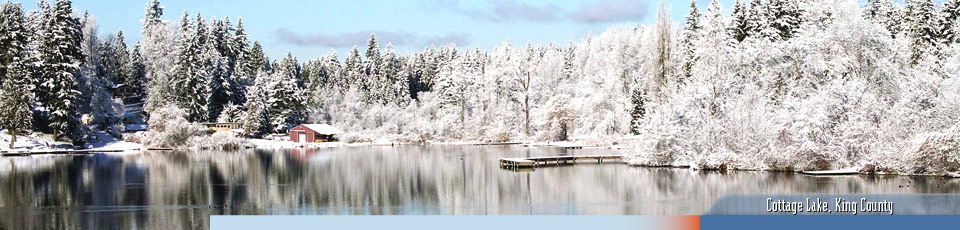
Scabland Lakes annual conference was one to remember!
by Wafa Tafesh, new WALPA President

WALPA’s 38th annual conference in Moses Lake, Scabland Lakes of Eastern Washington, was a major success! Huge thanks to sponsors, exhibitors, speakers, attendees, hotel staff, and all volunteers. Conference attendees included lake association members, researchers, students, teachers, local citizens, consultants, government staff, and others. The conference brought nearly 80 folks together to learn and share ideas.
WALPA recognizes Terry McNabb with the 2025 Secchi Disk Award
 The 2025 Secchi Award winner, announced at October’s conference, was Terry McNabb, principal of Aquatechnex, for his contributions to actively manage aquatic invasive plants and harmful algae in lakes and his strong support of WALPA over the years. The award was presented by Toni Pennington (Environmental Science Associates), with the nomination written by Jennifer Oden and Marisa Burghdoff (Snohomish County).
From vegetation to water quality to equipment: the only turnkey lake contractor in the Pacific Northwest
WATERLINE SPONSORED CONTENT
By Jake Walker, Certified Applicator, and Kyle Steelhammer, President/Owner Northwest Aquatic Management, LLC
 For many lakes and ponds across the Pacific Northwest, the hardest part of maintaining water quality isn’t identifying a problem — it’s finding a contractor who can address every aspect of lake health. Some companies apply herbicides but don’t offer mechanical harvesting. Others install fountains but can’t service them. Still others diagnose issues but can’t execute the work. Northwest Aquatic Management (NWAQUA) was founded to remove those barriers and provide complete, start-to-finish aquatic management under one roof.
WALPA Treasury update
William Hobbs, WALPA treasurer
Our mission and long-term commitment
Since 1986, the Washington Lake Protection Association (WALPA) has worked to protect Washington’s lakes through research, education, and strong advocacy. For nearly 40 years, this work has been powered by our volunteer board and committees and the steady financial support of our members.
Renew your WALPA membership for 2026!
 WALPA had a great response in 2025 to our new annual membership model. Some of our members took advantage of the automatic annual renewal option. If you need to renew your membership for 2026, you can do so now before the end of the calendar year. Remember that our annual membership is valid for the calendar year.
Continuous water quality data strengthens lake management decisions
WATERLINE SPONSORED CONTENT
by In-Situ staff
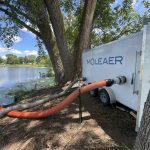 Across the country, lake managers are seeing more frequent harmful algal blooms, lower dissolved oxygen levels, and nutrient-driven water quality declines. These challenges create the need for new management strategies that require more frequent data validation than traditional grab sampling can offer. To respond effectively, utilities and watershed districts are turning to continuous water quality monitoring to generate reliable datasets and real-time visibility.
Please vote to complete WALPA’s Board today!

The WALPA Executive Committee is holding a special election to fill the President-Elect position that was not filled at the 2025 WALPA Conference in Moses Lake. Thank you to Darren Brandt, who has been serving on the WALPA board since 2024 and leading the Fundraising and Grants committee, for stepping up for the role!
Remembering Sally Abella

We remember Sally Abella, a treasured long-time WALPA Board member and President, who recently passed away. Read more about Sally in the article about October’s annual conference.
Ecology testing freshwater fish for PFAS
by Callie Mathieu, Natural Resource Scientist, Washington State Department of Ecology, and Katelyn Foster, Natural Resource Scientist, Washington State Department of Ecology
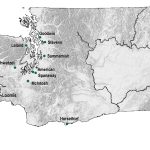 Eating locally caught freshwater fish can be a significant source of human exposure to a group of harmful chemicals called per- and polyfluoroalkyl substances (PFAS). Because some PFAS are bioaccumulative, they can build up in aquatic food webs to levels that are a concern for human health and wildlife. Ecology has tested PFAS in freshwater fish over the course of several studies since 2008, documenting widespread occurrence of PFAS across the state and highlighting the need for more comprehensive testing. To fill that data gap, we carried out a 2023 study on PFAS in ten lakes to better understand PFAS concentrations across a range of waterbodies and fish species.
Protecting Washington’s waters: prevention and readiness against invasive mussels
WATERLINE SPONSORED CONTENT
by Washington Department of Fish and Wildlife Aquatic Invasive Species Division
 Invasive freshwater quagga and zebra mussels (QZM), aquatic invasive species (AIS), pose an imminent threat to Washington’s environment, economy, health, and way of life. While not currently known to be established in Washington, invasive mussels have been intercepted on watercraft at the state border and attached to imported aquarium moss balls. Recent detections of quagga mussels (QM) in the Snake River in south-central Idaho demonstrate the significant risk that invasive mussels could be introduced into Washinton’s waters. Fortunately, protecting our lakes from invasive mussels is possible with your help.
How to best care for your lake: a community guide
by Barry Halverson, Co-Chair, Lake Lawrence Lake Management District
Your lake is a valuable resource and protecting it requires a proactive approach. The single most important step many communities have already taken is establishing an organized body dedicated to lake health. If your community already has a Lake Improvement District, a Lake Management District, a Special Use District or even a dedicated Lake Association, you are off to a great start!
The necessary differences in responding to planktonic vs. benthic toxic cyanobacteria
by Cecilia Welch, Climate and Water Epidemiologist, Washington State Department of Health
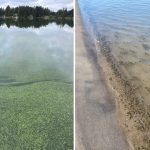 The majority of harmful algal blooms in Washington are attributed to cyanobacteria that grow in the water column and proliferate at the water’s surface, also known as planktonic blooms. For many years it was believed that planktonic blooms were the only kind of harmful algal bloom (HAB) and that those only occurred in lakes. The state’s public health guidance produced by the Department of Health (DOH) and the sampling program run by the Department of Ecology (DOE) all reflect this. However, in the past several years, another growth pattern has become more prominent that has presented both a public health concern and some perplexity due to its unprecedented nature.
Studying aquatic invertebrates in Washington’s Mountain Lakes
by Ty Stephenson, master’s candidate, Environmental Science, WWU
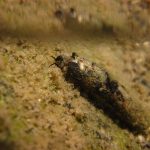
We do not often consider the bugs in our day-to-day lives, but that is exactly what I have been doing for the past two years. As a master’s student at Western Washington University, I partnered with the National Park Service to analyze their long-term mountain lake benthic macroinvertebrate monitoring data. In 2008 the North Coast and Cascade Network, an inventory and monitoring network of the National Park Service, began a long-term monitoring study on a selection of mountain lakes in Mount Rainier National Park and North Cascades National Park Complex. From 2008-2022, they visited the same lakes every year at the same time and collected a sample of the macroinvertebrates (think caddisflies, midges, and dragonflies, among many others) from the shoreline of each lake. The goal of my project was to use this data to better understand the mountain lake ecology and how the lakes’ biotic communities are changing over time.