
Celebrating 40 Years of the Lake Lawrence Lake Management District (RCW 36.61)
by Barry Halverson, Co-Chair of the Lake Lawrence Lake Management District
Note: this is the first of a series of articles showcasing some of the 43 lake associations that are WALPA members, since they are so important to lake protection.
About the lake
 Lake Lawrence is a 331-acre lake in southeastern Thurston County, just a few miles southwest of Mount Rainier. Formed thousands of years ago by the Vashon Glacier as it moved north from the Puget Sound region into Canada, the lake consists of two distinct basins: the larger East basin (277 acres) and the smaller West basin (54 acres). The lake has a maximum depth of 25 feet and an average depth of approximately 12 feet.
Lake Lawrence provides year-round fishing for trout, bass, bluegill, and other native fish species and offers a range of recreational opportunities, including swimming, water skiing, jet skiing, kayaking and paddleboarding.
Historical use and development
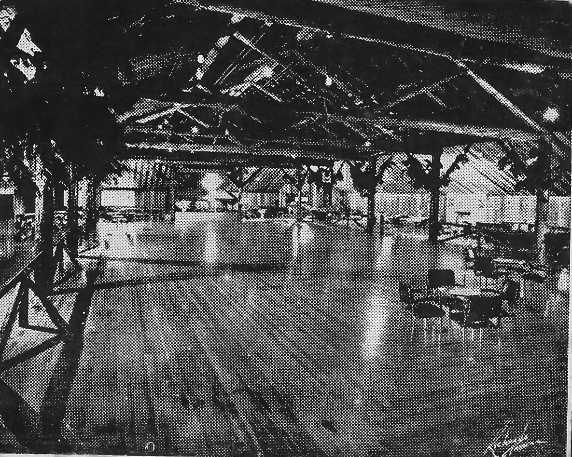 European settlement around Lake Lawrence began in the mid-1800s. In 1923, the “Edwards Pavilion,” a 120-by-140-foot structure built entirely from fir logs harvested on the property, was built as part of Edwards Resort, a popular fishing and recreational destination. At its peak, the resort had 12 cabins, more than 75 camping sites, and around 110 hand-built wooden boats.
When the resort closed in 1973, the buildings and land became part of the Lake Lawrence Community Club, which continues to maintain these facilities for its members. The Pavilion, now recognized as a county and state historical site, is used for community events and rentals. 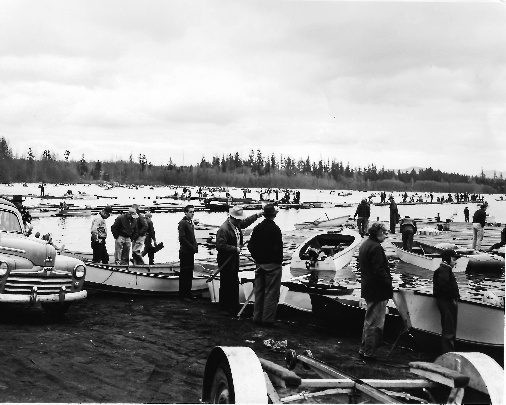
Lake Lawrence today
Currently, there are four homeowners’ associations around Lake Lawrence, each with its own community parks and boat launches, and about 535 upland residential parcels and 165 waterfront parcels.
The lake also has a public boat launch on the southwest end, managed by the Washington Department of Fish and Wildlife. The public boat launch was renovated in 2019 with improved parking, dock, and ramp facilities. Next to the launch is undeveloped land acquired by Thurston County in 1988.
Why a Lake Management District was necessary
Two major human activities severely disrupted Lake Lawrence’s ecosystem.
From the late 1800s to the early 1900s, two sawmills operated on the lake, depositing massive amounts of sawdust and woody debris into the water.
Then, between 1908 and 1928, the Deschutes River was diverted into Lake Lawrence via a man-made canal, transforming the lake into a reservoir to generate power for Olympia and Tumwater. Over these 20 years, more than 20 feet or approximately 4.1 million cubic yards of nutrient-rich sediment accumulated on the lake bottom.
What has the Lake Management District accomplished?
In response to these impacts, the Lake Lawrence Lake Management District (LMD) was formed in 1986. Its initial mission was to address severe infestations of invasive aquatic plants, including fragrant water lily, yellow flag iris, knotweed, purple loosestrife, curly-leaf pondweed, and others that covered much of the shoreline and surface.
Through extensive studies and management efforts, the LMD successfully eliminated most of the noxious and invasive aquatic plant species. A dredging study in the early 1990s concluded that removal of the enriched sediments would cost more than $47 million, however, making it financially infeasible.
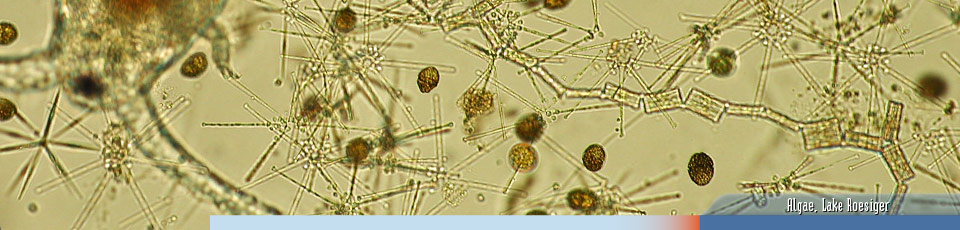
The nutrient-rich sediments continue to fuel frequent and prolonged cyanobacteria, or harmful algal blooms (HABs). On average, these blooms now close the lake to recreation around 29 days a year.
In 2023 the LMD funded a $100,000 Cyanobacteria Management Plan (CMP) study to identify science-based solutions. Preliminary results indicate that dredging, the most effective option, would now cost more than $500 million. Alternative approaches include phosphorus-binding treatments using alum, lanthanum, zero valent iron or oxygen generation systems to oxygenate the lake bottom near the sediment/water interface.
Planning for the future
The Lake Lawrence LMD will continue to manage noxious and invasive aquatic plants while expanding its focus to include cyanobacteria control. In the coming months, the LMD Steering Committee will review the results of the CMP study and evaluate implementable options based on the best available science. Any effective solution will be costly and require ongoing maintenance. But inaction means accepting worsening HABs and the gradual loss of the lake as a recreational and ecological resource.
As harmful algal blooms increase nationwide, Lake Management Districts are increasingly expected to manage problems never anticipated when RCW 36.61 – which concerns lake and beach management districts — was enacted. State support has declined and funding has not kept pace with the growing challenges and costs, and RCW 36.61 needs to be updated to address this reality. Thurston County LMDs, in partnership with the Washington State Lake Protective Association, are leading that effort but public support is essential. If you would like to help, please contact Barry at lakelawrence750@gmail.com .
Learn more!
For several years, the Lake Lawrence LMD has produced dozens of educational videos to help residents and lake communities better understand how to protect and care for lakes, one of our most precious natural resources. These videos are available to the public on YouTube at https://www.youtube.com/@lakelawrence. Additional resources, including detailed information on toxic algae, are available at https://www.lakelawrencelakemanagementdistrict.com